Before your first community run: questions to ask
Check the pace, walking breaks, route, registration and return plan before joining a community run in Singapore, with examples from local organisers.
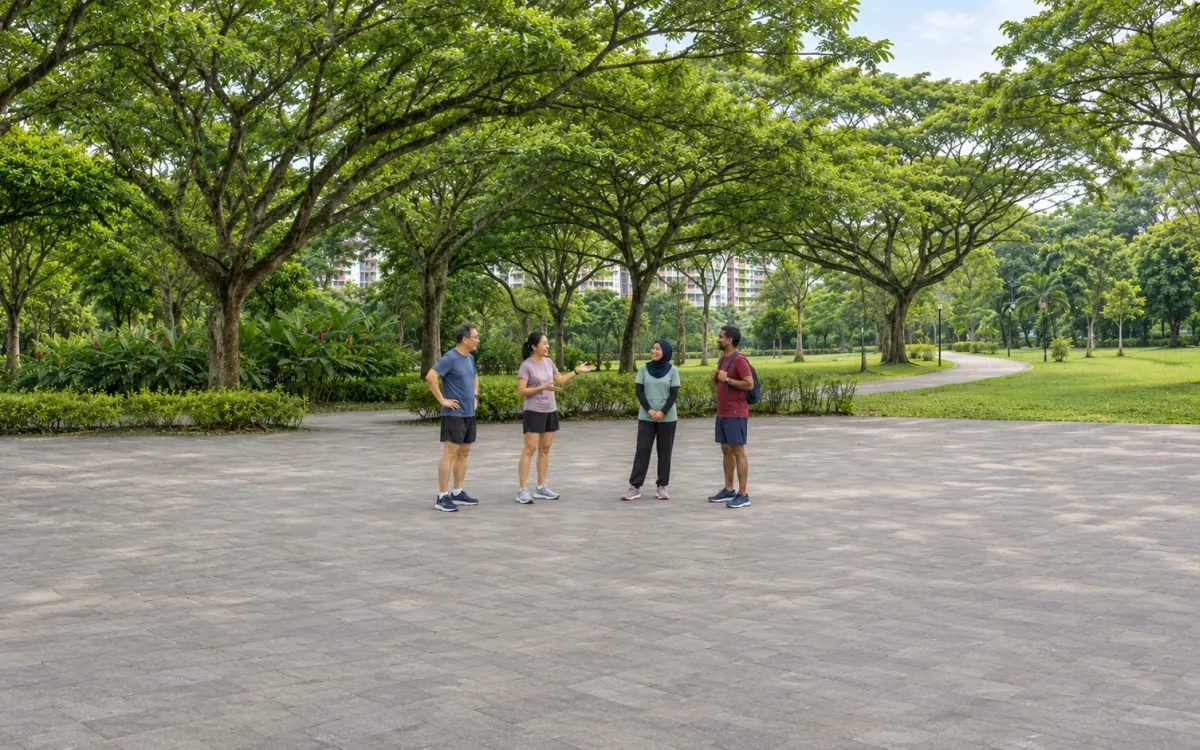
Before joining your first community run, establish what the particular session involves. Ask about the distance, pace, walking breaks and return to the meeting point. Then check registration, arrival arrangements and where changes will be announced. A welcoming group is a good start; these details tell you whether its next outing suits you.
You don’t need to enter a race to spend time with other runners. Equally, a social invitation doesn’t tell you whether a session includes hills, continuous running or a long route. This guide uses published organiser information to help you ask useful questions. It isn’t a review based on attending the groups mentioned.
What sort of session am I joining?
Read the session description before choosing a date. A steady group outing, a timed event and a training session can ask quite different things of you, even when all three welcome newcomers.
East Coast Park parkrun describes its event as a free weekly 5km community event where people can walk, jog, run, volunteer or spectate. That explicit welcome for walking is useful information for someone who doesn’t want to run continuously. The advertised outing is still 5km, so choose something shorter if that isn’t a comfortable distance for you. It doesn’t establish the arrangements at a different club’s session.
Compare that with Running Department’s monthly schedule, which distinguishes base, tempo, strength, hills and paced long runs. Its November 2026 schedule, for example, lists a Hills session on 25 November with 5km and 10km routes. The shorter distance alone doesn’t make it equivalent to a flat, easy outing. Check the latest programme and ask what the session involves before deciding it fits.
If you’re still working out what a comfortable independent outing feels like, try a familiar first run-walk session before adding the demands of keeping track of a group.
Will the pace work with my walking breaks?
Give the organiser an honest description of what you currently do. Someone who alternates running and walking needs a more specific answer than a list of pace groups. Ask whether breaks are built into the session, whether the group regathers and who stays with people at the back.
A pace written as minutes per kilometre describes time over distance. As an illustration, 7:30 per kilometre over 5km works out to 37 minutes 30 seconds of continuous movement, before stops. That arithmetic isn’t a finishing requirement or a recommendation to match the pace. It helps explain why a pace label alone doesn’t answer the walking-break question.
If the organiser calls the session “no-drop”, ask how that works at junctions and when someone needs to slow down. Establish whether a leader waits, another group follows or you would need to find your own way back. Choose a session whose actual arrangement sounds manageable, rather than planning to push harder to avoid inconveniencing anyone.
Do I need to register, check in or bring anything?
Keep entry, results and facilities separate when reading the instructions. A free run may still require registration or an arrival check-in.
For parkrun, the official registration guidance explains how to register once and obtain a personal barcode. Bring a scannable printed or downloaded copy. The local event page makes clear that forgetting it means you won’t receive a time. Allow enough time to receive the confirmation before travelling.
Running Department’s FAQs illustrate a different arrangement. They list pace groups from 5:00 to 7:30 per kilometre, with Healthy 365 check-in for regular Wednesday runs and RSVP requirements for special collaborations or event-based training. The organiser distinguishes that check-in from its own RSVP system. It also says that runners who don’t scan in can still join, but won’t have access to bag deposit or hydration support.
Read the instructions for your chosen date rather than relying on a general invitation. Confirm any fee, booking, waiver or membership requirement, and check rules for children or companions if relevant to your plans. This adult-focused guide doesn’t establish those permissions.
Travel light and keep valuables with you. Bring the water and belongings you need for your own outing instead of assuming that refreshments or storage will be available.
Where do we meet, and how would I leave early?
Save the exact meeting point and distinguish the briefing time from the departure time. A park name or MRT station can cover several possible entrances. Check which entrance, exit or landmark the organiser means, and allow time to introduce yourself before the group moves off.
Look at the proposed route as a complete outing. Find out whether it returns to the start, crosses roads, uses steps or hills, or finishes elsewhere. A shorter option is only helpful if you know where it separates from the main group and how to get back.
Before setting off, agree whom to tell if you stop. Ask how to contact a leader and what happens if you lose sight of the group. Keep your own way home workable, including access to your belongings. You shouldn’t have to finish a longer route just to retrieve a bag or reach transport.
If you’re joining with a friend, choose the session together and agree whether you’ll stay together. Being in the same event doesn’t necessarily put you in the same pace group.
Where will changes or cancellations appear?
Check the organiser’s current event page and stated update channel before leaving. A recurring calendar entry doesn’t guarantee that the next session will take place.
parkrun’s cancellation guidance tells participants to check the event website or its social channels. It explains that cancellations can happen at short notice when conditions are unsafe or a course is unavailable. That is a reason to check again close to departure, rather than treating an old screenshot as confirmation.
Make your own outdoor conditions check too. If a change makes the outing unsuitable for you, choose another session. The effort of travelling there or meeting new people doesn’t oblige you to continue.
Ask one clear question before committing
When the event information leaves a gap, describe the uncertainty in a short message. For example:
I’m considering your next session and usually alternate gentle running with walking. Which group accommodates that, how do you regroup, and can I return to the start early? Please also let me know what registration or check-in I need.
Adapt that example to your own distance, arrival or access questions. A useful reply should explain what you would actually do on the day. If the answer still depends on keeping up with a pace you don’t comfortably manage, pick a different session and ask again.
For a first visit, a workable outing and an uncomplicated return are enough. You can decide afterwards whether you enjoyed the company and want to come back.
The accompanying image is AI-generated photorealistic editorial artwork of a Singapore-inspired park. It does not depict Running Department, parkrun or an observed community-run briefing.
Related posts

Strength work when most of your exercise is walking or running
Understand where strength work fits alongside walks and runs, what whole-body coverage means, and how to choose suitable instruction in Singapore.
Your first park-connector cycle: keep it manageable
Choose a short first cycle on Singapore's park connectors, check path permissions and your bicycle, and plan a return you can comfortably manage.
Accessible park outings: plan a calmer visit
Plan a shorter park visit around paths, resting places, toilets and transport. Includes therapeutic gardens and questions to ask before travelling.