Your first run-walk outing: keep it manageable
A first-day guide to choosing a familiar route, alternating gentle running with walking, judging effort and finishing comfortably in Singapore.

Your first run-walk need not be a test of how far you can go. The useful result is simpler: you find a pace and a route that make you willing to go out again. Walking between short runs is part of the outing, not a sign that it has gone wrong.
Pick a route you can leave easily
Choose a familiar, fairly level path near home. An out-and-back stretch works well because you can turn around before you feel tired and finish close to where you started. Avoid planning a long loop that commits you to getting all the way round. If the path has busy crossings, narrow shared sections or poor lighting, choose another time or place.
Check the day’s conditions before leaving. Our five-minute outdoor check covers heat, rain and air quality in Singapore. A run-walk can wait when conditions are unsuitable; an indoor walk is still an option.
Start by walking, then alternate
The NHS Couch to 5K plan starts each session with a five-minute warm-up walk. Its first session then alternates one minute of running with 90 seconds of walking, ending with a five-minute cool-down walk. The full first session takes 28½ minutes, excluding stretches. If you want a timed beginner programme, follow the NHS plan itself rather than an improvised version of its later weeks.
You do not have to complete that session to make a worthwhile first outing. If you are testing how running feels, choose a short return point and stop the running portions sooner if needed. This is a practical choice, not a separate training prescription. Keep the walk home within your plans from the start.
Keep the running portions easy
Start each run portion gently enough that you are not racing the timer. In an ActiveSG interview, a physiotherapist identifies going too fast and making every run a hard effort as common mistakes. The aim today is to learn what an unhurried pace feels like.
You can use speech as a rough check on effort. HealthHub’s talk-test guide describes moderate activity as allowing conversation but not singing, while vigorous activity makes conversation difficult. That guide also notes that the same activity can feel different to different people. If you cannot speak comfortably during a running portion, slow to a walk; there is no need to hold a particular speed to earn the word “run”.
Finish with enough left for another day
Walk gently at the end instead of stopping abruptly. The NHS plan uses a five-minute cool-down walk and places a rest day between its three weekly sessions. If you follow that programme, keep those rest days instead of making up a missed session by stacking runs together.
Before you leave the route, note one thing to change next time: perhaps the starting point was inconvenient, the path was crowded, or the running portions felt too quick. Our running-habit guide can help you fit the next outing into an ordinary week. You need only one workable adjustment, not a new training system.
If you are worried about your health before starting, the NHS advises speaking to a GP. HealthHub likewise advises people with conditions such as heart disease, high blood pressure, diabetes or asthma who have been inactive to consult a doctor about suitable activity and intensity. Stop if something does not feel right. This guide offers general information for an ordinary beginner outing, not individual medical or training advice.
Sources
- NHS: Couch to 5K running plan
- ActiveSG: Running For Fitness
- HealthHub: Understanding the different intensity levels of physical activity
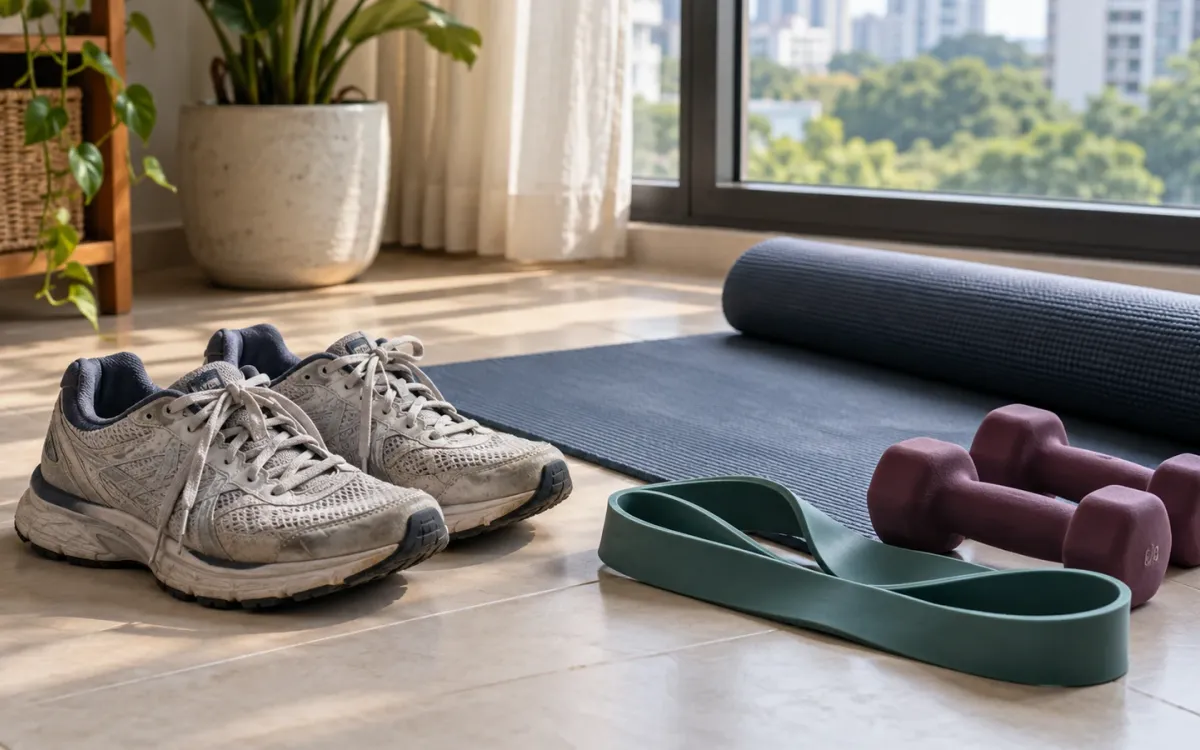
The accompanying image is an AI-generated photorealistic editorial image. It does not depict a surveyed route or a real participant.
Related posts
Strength work when most of your exercise is walking or running
Understand where strength work fits alongside walks and runs, what whole-body coverage means, and how to choose suitable instruction in Singapore.

Walking counts in a busy week
A practical way to fit short walks around commutes, meals and errands in Singapore, without pretending every stroll is a workout.

A short East Coast Park run or walk
Plan a simple out-and-back from East Coast Park's Area D, with a clear turnaround, current access checks and room to adjust the outing.