Before a run or walk in Singapore: a five-minute check
Check heat, lightning, haze and park notices before an outdoor outing in Singapore, then choose a route and return plan that suit the day.

The sky can look perfectly workable from your window and tell a different story by the time you reach the park. A quick check before leaving is easier than trying to rescue a run halfway through it.
This is a decision routine, not a promise that conditions will stay the same. Give yourself a route you can shorten, and check the live sources again if the weather changes.
Start with the route and the way home
Decide where you will enter the park or connector, where you can turn back, and how you will get home. For an ordinary outing, a familiar out-and-back section is often simpler than a loop with unfamiliar crossings. If you are going somewhere new, save the operator’s page and note the nearest public transport option.
Open the NParks park directory for the place you intend to visit. Read its current notices, opening hours and access information. A park being open does not mean every bridge, path or facility is available. Follow the signs on the ground if they differ from a saved map.
Look at heat stress, not just the temperature
Singapore’s Meteorological Service Singapore (MSS) heat-stress page shows the current level at monitoring locations. It uses Wet-Bulb Globe Temperature, which accounts for humidity, wind and sunlight as well as air temperature. The reading is useful for planning time outdoors; it is not a personal fitness score or a forecast for every shaded corner of your route.
The linked public heat-stress advisory calls for less outdoor activity and regular breaks at moderate levels, and for outdoor activity to be minimised at high levels. If the conditions are uncomfortable, shorten the outing, choose a gentler walk or move it to another time. Bring a way to drink that suits the length of your trip.
Check rain and lightning separately
A shower may change your footing. Thunder changes the plan altogether. Check the MSS forecast and lightning information shortly before setting out; the information can change quickly. A clear patch overhead is not proof that a nearby storm is harmless.
If you hear thunder or see lightning, stop the outdoor activity and seek proper shelter in a building or enclosed car. The MSS lightning-safety advice says not to shelter under a tall tree or a small structure such as a tent, and to wait at least 30 minutes after the last thunder before resuming outdoor activity. Do not use a park shelter as a reason to push on through a thunderstorm.
NParks also advises visitors to seek shelter during bad weather and to avoid forested areas during and immediately after heavy rain. An alternative indoor activity is a perfectly good choice for the day.
Use the right haze reading for the decision
When haze is a concern, look at NEA’s current information instead of relying on how the air looks from home. Its outdoor-activity guide uses the 1-hour PM2.5 reading for an activity you are deciding on now, such as a jog. The 24-hour PSI forecast and health advisory help with planning for the next day.
Follow the current advisory, especially if you have a condition that makes you more vulnerable or you feel unwell. You do not need to turn a poor-air day into a test of determination. A shorter, less strenuous or indoor plan may be the better decision.
Make the final choice small
Before you put on your shoes, ask five questions:
- Is the route open, and do I know a straightforward way back?
- What do the current heat-stress and weather information say?
- Is there a lightning or heavy-rain reason to stay indoors?
- If haze is present, what does NEA advise for an activity now?
- Do I have water, a phone or other essentials that this outing needs?
If one answer changes, change the outing. There will be another day to use the original route.
Sources
- MSS: Heat stress and public advisory
- MSS: Weather information and lightning
- NEA: Outdoor activities during haze
- NParks: Find a park or park connector
- NParks: Parks dos and don’ts
Sources checked on 9 October 2026. This is general planning information, not personal medical advice. The accompanying image is an AI-generated editorial illustration, not a surveyed Singapore route.
Related posts
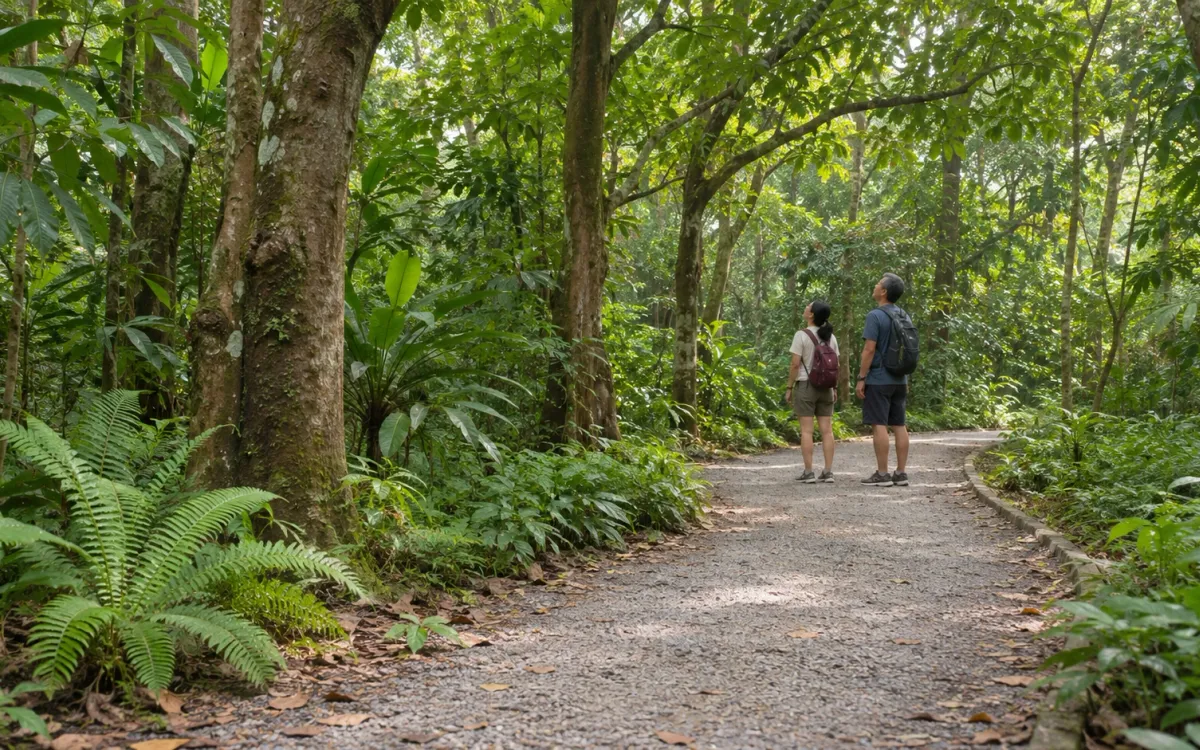
Your first nature walk in Singapore: start with one trail
Plan a first self-guided nature walk with a clear return, light packing and nature-area rules. Includes Hindhede’s current boardwalk entrance advice.
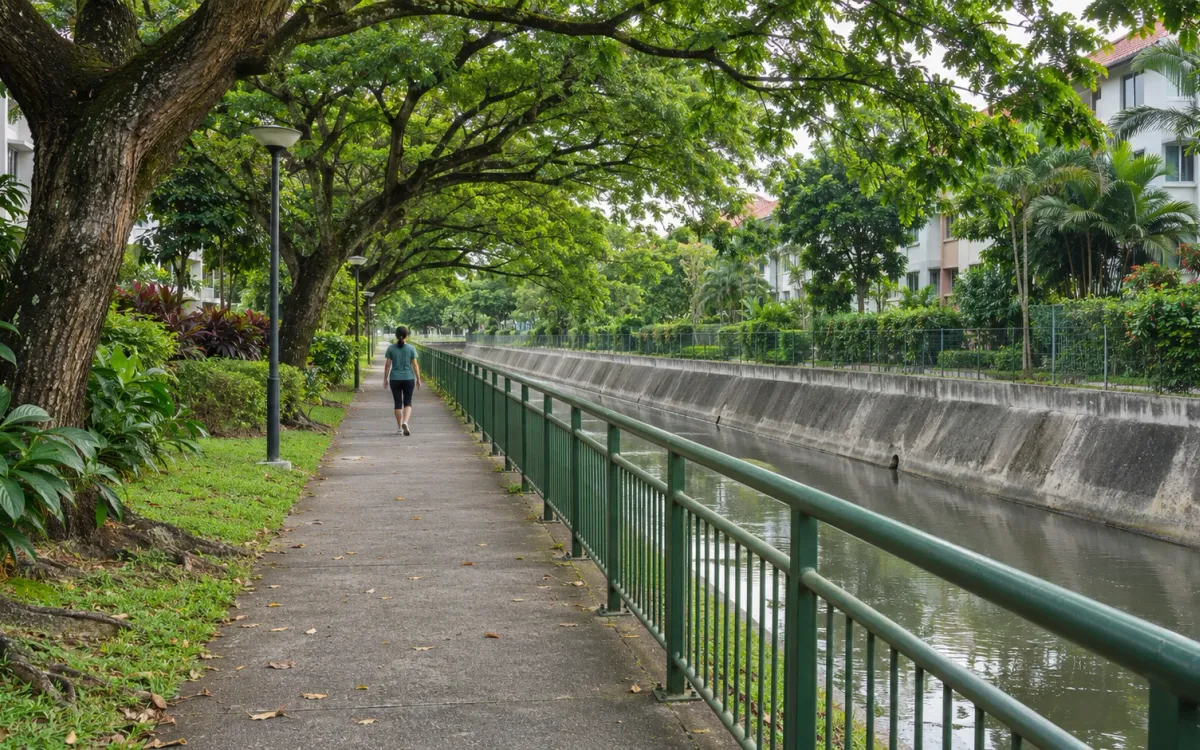
Siglap Park Connector: plan the walk towards Bedok
Understand what Siglap Park Connector links, the bridge without a ramp, current C4 approach works and why the reservoir circuit is a separate plan.
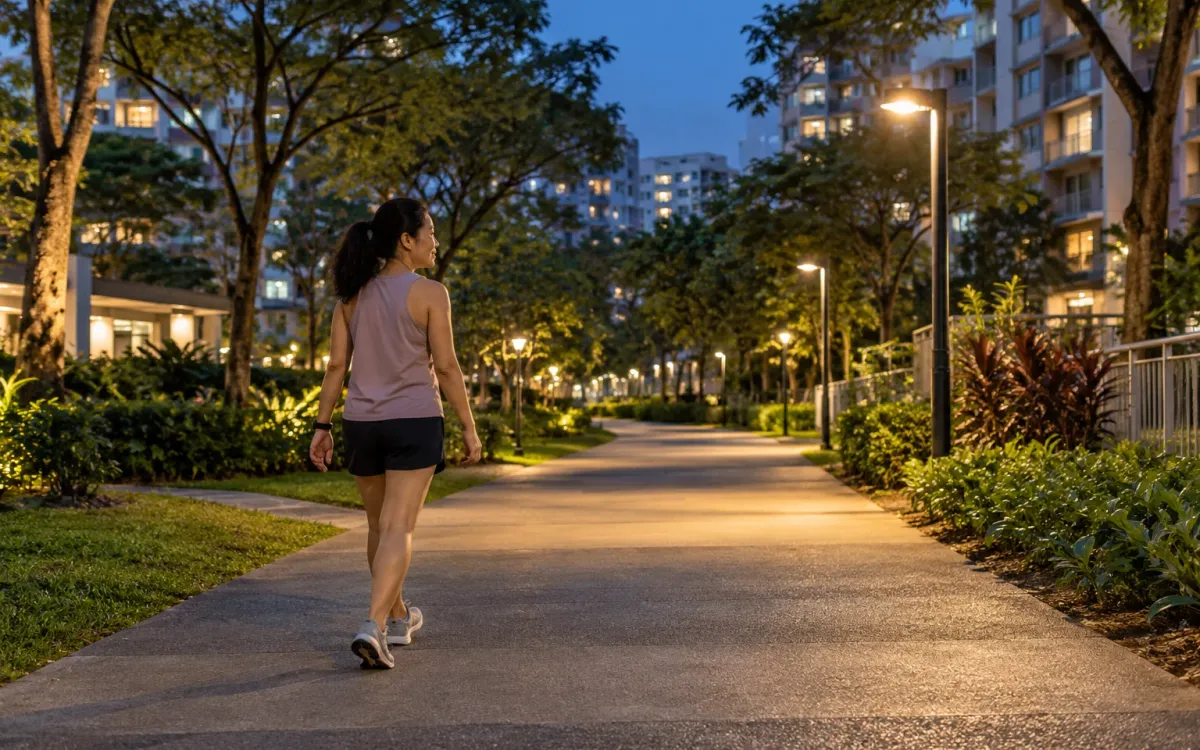
An evening walk or run after work, without a late finish
Plan an after-work walk or easy run in Singapore with a clear finish time, a suitable lit route and a way home if conditions change.