Strength work when most of your exercise is walking or running
Understand where strength work fits alongside walks and runs, what whole-body coverage means, and how to choose suitable instruction in Singapore.
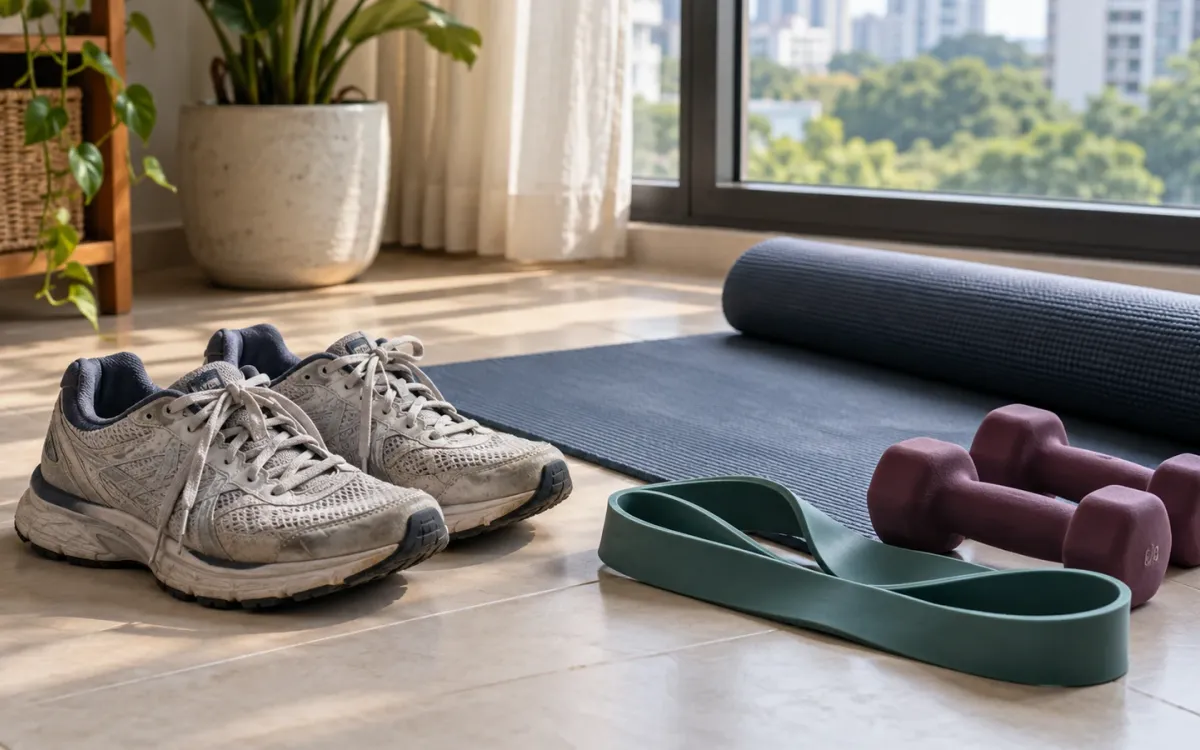
If most of your exercise is walking or running, give strength work its own place when you review the week. The useful first decision is how you will learn appropriate movements and cover different muscle groups. Buying weights or choosing the hardest-looking class can wait until you know what you need.
This guide explains Singapore’s general public guidance and ways to find instruction. It does not set an individual training programme, and no class or exercise routine was tested for this article.
Look at strength separately from walking minutes
HealthHub’s activity overview describes brisk walking and jogging as aerobic activities. Strength training uses your bodyweight or external resistance, such as weights or a resistance band, to develop muscular fitness.
For adults aged 18 to 64, the Singapore Physical Activity Guidelines (PDF) recommend muscle-strengthening activity on at least two days a week, targeting the major muscle groups. Moderate or vigorous intensity is encouraged. This sits alongside the aerobic recommendation; it is a different part of the guidance.
Walking further does not, by itself, establish that a week includes that strength component. When looking at your routine, ask what the sessions actually involve rather than counting every active day as the same kind of exercise. Our walking-in-a-busy-week guide covers making room for ordinary walks; the strength question needs a separate look.
Consider coverage before collecting exercises
It is easy to choose a routine because it contains one familiar movement. A useful question is whether the programme also covers the rest of the body. HPB’s home strength resource identifies the legs, hips, back, chest, abdomen, shoulders and arms as major areas to include across the selected activities.
You do not need to assemble an exercise for every area from unrelated clips. Look for a coherent resource or ask an instructor how their programme covers those areas. A movement’s name alone does not explain the technique, resistance or variation that suits you.
The two-day guideline is a general reference. It does not decide your starting load, session length or progression. For adults with chronic conditions who are unsure how to begin, the Singapore guidelines advise consulting a health professional about a suitable exercise regime.
Choose a way to learn that you can use again
Bodyweight exercises, bands and weights are all recognised forms of resistance work. The practical choice includes where you can exercise and how you will get help with an unfamiliar movement.
If you prefer to learn at home, HPB’s MOVE IT resources include beginner bodyweight material and guides organised for different audiences. Read the audience and instructions before following a resource. Having no equipment to set up does not settle whether a particular movement is appropriate for you.
If you want instruction in person, check what a session teaches before booking. Active Health lists a Balance and Muscular Fitness workshop covering those fitness components. Its page describes a 60-minute workshop and requires first-time participants to complete participation safety clearance. Check current arrangements with the provider; a programme listing does not confirm an available place.
Before choosing a resource or class, useful questions include:
- Is it intended for someone with my experience, and what preparation does it assume?
- What equipment and space are required?
- How does the programme cover the major muscle groups?
- Who can explain a movement or discuss an appropriate alternative if I cannot follow it?
These questions help you choose instruction. They do not replace an assessment of your individual needs.
Make room without rebuilding the whole week
Start with your actual diary: work, travel, the walks or runs you already value, and the time a class or home session would occupy. If the only available option involves a long journey you regularly cannot make, consider another learning format before committing to equipment or a booking.
The aim is a routine you understand and can return to. Our running-habit guide discusses fitting activity around an ordinary week; an appropriate strength programme still needs to account for your starting point and other activity.
Choose the source of instruction first, then work out how its suitable sessions fit. That leaves you with a practical next step: a resource you have read, questions for an instructor, or a conversation with a health professional where needed.
The accompanying image is AI-generated photorealistic editorial artwork. It depicts a conceptual home exercise corner, not tested equipment or a recommended training setup.
Related posts

An evening walk or run after work, without a late finish
Plan an after-work walk or easy run in Singapore with a clear finish time, a suitable lit route and a way home if conditions change.
Haze and outdoor exercise in Singapore: which reading matters?
Use Singapore's 1-hour PM2.5 reading for a run or walk soon, and the 24-hour PSI forecast for tomorrow. Understand the official activity advice before you head out.
Your first run-walk outing: keep it manageable
A first-day guide to choosing a familiar route, alternating gentle running with walking, judging effort and finishing comfortably in Singapore.