Running in Singapore's heat: plan the outing, not just the pace
Use Singapore's official heat-stress advisory to choose a comfortable route, adjust an outdoor run and plan water and breaks without chasing a fixed rule.
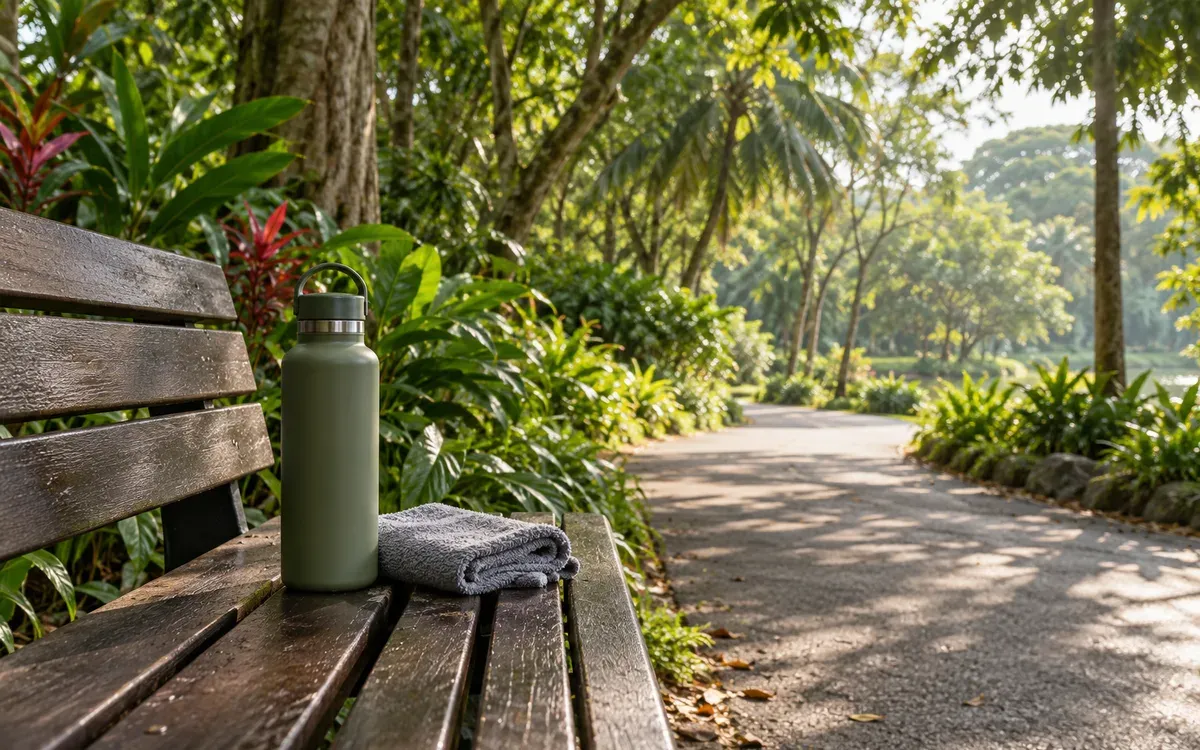
On a warm day, the most useful running decision may happen before the first step. You can keep the outing, shorten it, make it gentler or leave it for another time. The aim is to get home feeling that the plan suited the conditions, not to prove you could ignore them.
Singapore has a public heat-stress reading for that decision. It is more useful than treating the air temperature alone as the whole story.
What the heat-stress reading tells you
The Meteorological Service Singapore (MSS) heat-stress page reports levels using Wet-Bulb Globe Temperature (WBGT). This measure combines air temperature, humidity, wind and solar radiation. The page shows readings from monitoring locations and links to the current public advisory. A reading is a guide to the environment, not a guarantee about how any one person will feel on a particular path.
The January 2026 advisory is for prolonged outdoor activity in direct sun. At moderate heat stress, it advises reducing outdoor activity and taking regular breaks indoors or under shade. At high heat stress, it advises minimising outdoor activity and taking more frequent or longer breaks. It also notes that health, activity level and clothing affect individual risk.
That means a runner need not make the same decision every time a number appears. Look at the current level, the kind of outing you planned and the route itself. If the advisory points towards doing less, change the plan rather than arguing with it.
Build in an easier option
Choose a route with a clear turnaround and an easy way home. If it is your regular path, decide in advance which shorter section still feels worthwhile. If you are exploring somewhere new, check its opening hours, access notices and transport before leaving. The NParks park directory is a sensible place to start.
Shade, rest points and an indoor stop can make a route more practical, but do not assume they are available all the way around. A walk in a nearby park may suit the day better than a longer run on an exposed path. Even a morning or evening outing still deserves a current conditions check; MSS notes that high-intensity exercise can carry heat risk at night in tropical climates.
You can also postpone. Moving one session is less disruptive than letting an uncomfortable outing become the reason you stop going out altogether.
Carry water in a way that suits the trip
You do not need to follow a single litre-per-hour rule taken from someone else’s training plan. Consider how long you expect to be out, whether there are reliable places to refill, and whether you will be travelling home afterwards. Bring a bottle or plan a water stop that fits the route rather than hoping a facility will be open.
HealthHub’s hydration guidance notes that people need more fluid when they exercise and perspire. The public heat-stress advisory says to drink more fluids at moderate and high levels and to watch for signs of heat-related illness. It does not turn a fixed quantity into a universal prescription for every runner.
If you feel unwell, stop the activity and seek help. Do not use this general article in place of advice from a healthcare professional about your own health or exercise limits.
Keep the next run easy to choose
A useful plan has two versions: the outing you hope to do and the shorter one you are content to do instead. Check the heat-stress page before leaving, look at the actual route and keep a way to change course. That small bit of flexibility makes room for running without making every hot day a contest.
For the other checks that matter before an outdoor outing, see our five-minute Singapore conditions checklist.
Sources
- MSS: Current heat-stress information
- MSS: Managing heat stress outdoors, January 2026
- MSS: Understanding heat stress
- HealthHub: The best refreshment
- NParks: Find a park or park connector
Sources checked on 9 October 2026. This article provides general information and does not prescribe a training or hydration plan. The accompanying image is an AI-generated editorial illustration, not a surveyed Singapore route.
Related posts
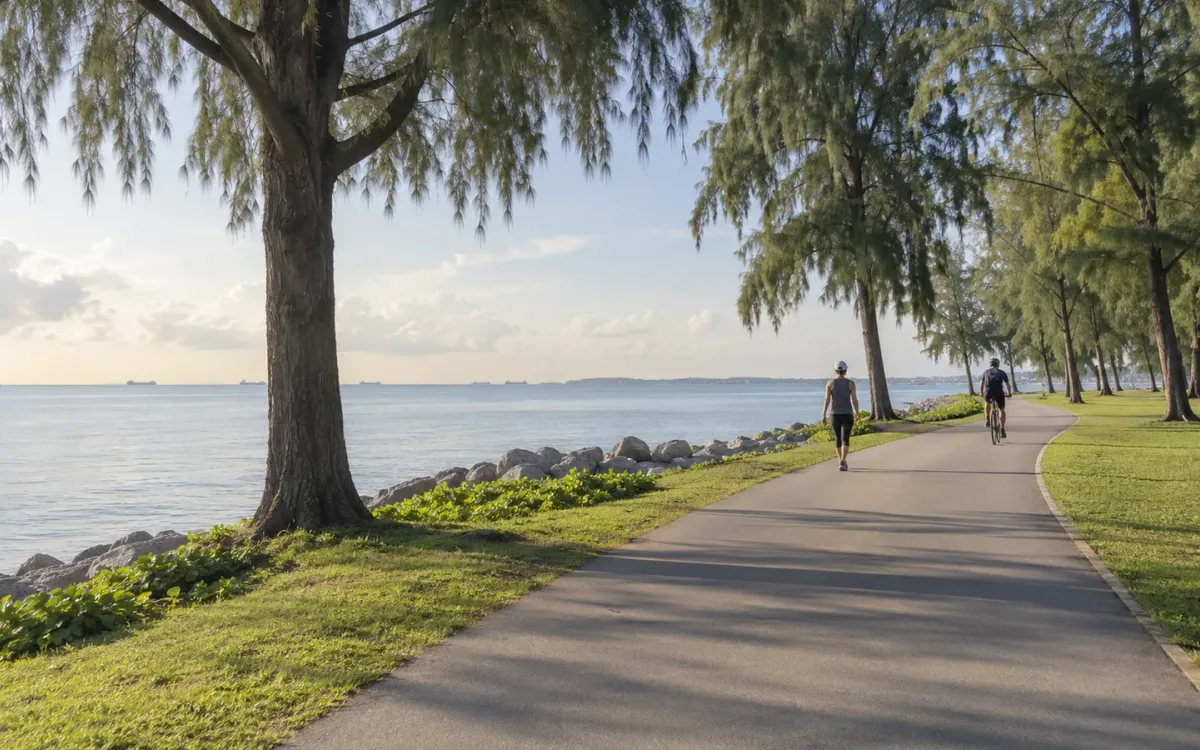
A short East Coast Park run or walk
Plan a simple out-and-back from East Coast Park's Area D, with a clear turnaround, current access checks and room to adjust the outing.
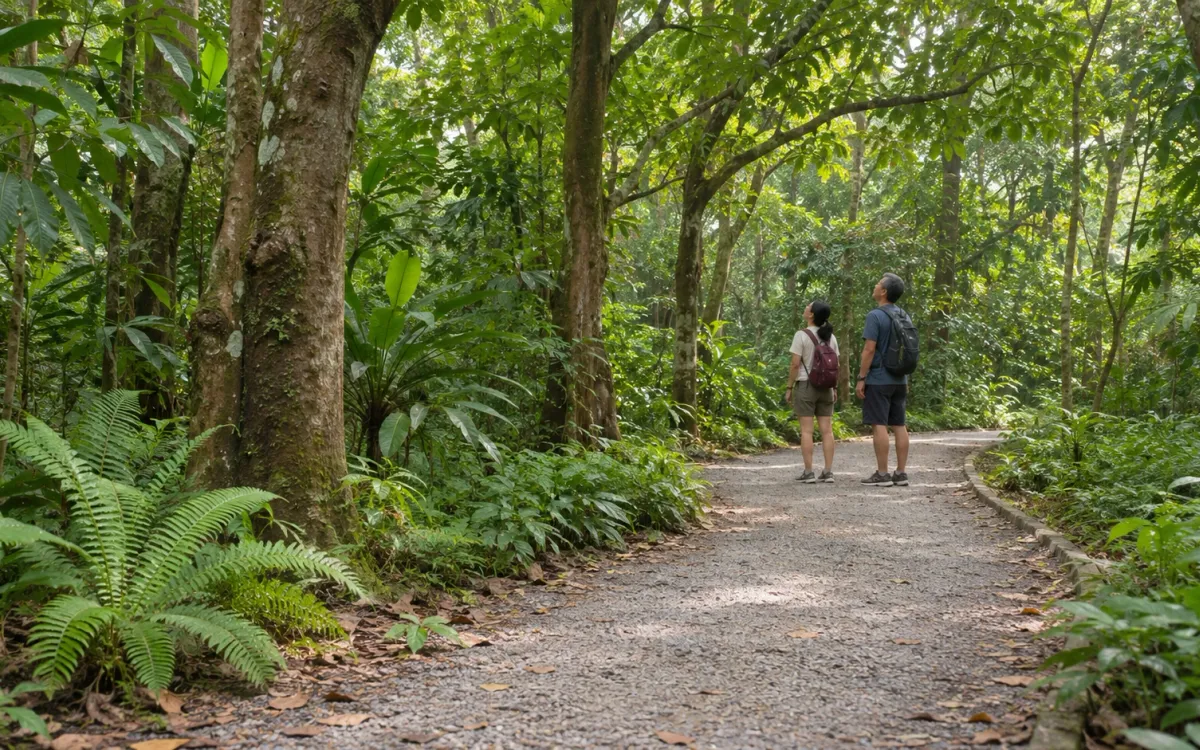
Your first nature walk in Singapore: start with one trail
Plan a first self-guided nature walk with a clear return, light packing and nature-area rules. Includes Hindhede’s current boardwalk entrance advice.
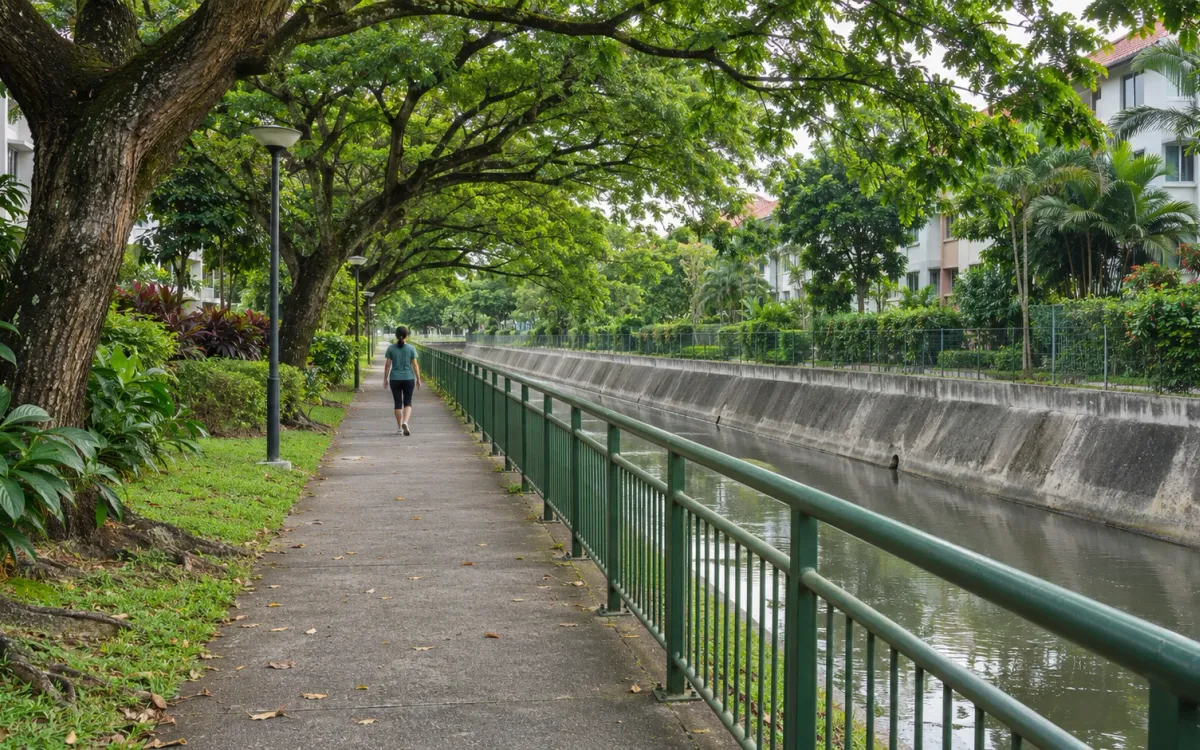
Siglap Park Connector: plan the walk towards Bedok
Understand what Siglap Park Connector links, the bridge without a ramp, current C4 approach works and why the reservoir circuit is a separate plan.