Bishan–Ang Mo Kio Park on foot: choose a manageable walk
Choose a short walk at Bishan–Ang Mo Kio Park, with practical arrival options, current bridge diversions and the river warnings to understand.

For a first walk at Bishan–Ang Mo Kio Park, choose one part of the park and a return point before setting off. The river makes an appealing centre for an outing, but a loop that depends on a particular bridge is a poor fit while crossings are under improvement works.
You can still plan a useful visit: arrive at a clearly identified entrance, follow an open designated path and leave room to turn back. This guide draws on NParks’ information and notices, rather than a walk surveyed on the ground.
Choose your arrival point first
NParks’ park page lists Bright Hill MRT as a five-minute walk away, using an entrance along Ang Mo Kio Avenue 1. Treat that as an arrival estimate; allow extra time to find the entrance and read the signs.
If you are driving or arranging a drop-off, use a named carpark rather than simply asking for “Bishan Park”. The official information booklet (PDF) identifies Carparks A, B and C, with drop-off points at A and B. It also places the Allotment Garden near Carpark C along Sin Ming Avenue. Those are useful meeting references; parking fees apply.
Tell your walking companion which entrance or carpark you mean, and save the arrival point on your phone. Decide whether you will return there or leave elsewhere. For a short first visit, returning to the same entrance keeps the journey home easier to organise.
Read the bridge notices before choosing a loop
The notices checked on 13 November 2026 affect two crossings:
- The bridge closest to Bishan Park Condominium (PDF) is closed for improvement works from 16 September 2026, with completion expected on 31 December 2026. Its notice marks an alternative route.
- The bridge closest to Dragonfly Pond (PDF) is closed from 24 August to 4 December 2026. That notice shows nearby alternative bridges.
The entrance notice for the Ang Mo Kio Avenue 1–Marymount Road junction (PDF) directs visitors to a replacement entrance along Ang Mo Kio Avenue 1. NParks continues to list the junction entrance as closed until further notice. Construction in the area does not mean the whole park is closed.
Open the relevant notice map before travelling, then follow the current barriers and diversion signs when you arrive. An expected completion date is not confirmation that a bridge has reopened. Recheck the park page for visits after the dates above.
Match the walk to the time you have
For a brief river visit, follow an open designated path within the section where you arrive and return along it. Choose a recognisable junction or landmark as your turnaround. You can enjoy the changing river views without needing to cross to the opposite bank.
For a slower outing around the gardens, choose one feature from the booklet, such as the Cleansing Biotope or Allotment Garden, and work out the approach from your arrival point. The biotope uses planted wetland cells to help treat river and pond water. It offers something specific to look at without making the outing depend on covering the whole park. Let the current signs determine how close you can go.
If you want to finish at a different entrance, check that exit and your onward transport before starting. Keep a return option in mind if a diversion makes the walk longer than you intended. The park’s advertised length is not the distance of a complete circuit, nor does it establish how far your chosen paths will take you.
Bring drinking water and identify a toilet or shelter on the information available at your entrance. The booklet lists these facilities, but a map symbol does not confirm that a particular facility is working when you visit. If someone in your group needs a step-free route, confirm the actual entrance, diversion and return path; a general accessibility listing cannot establish every crossing’s present condition.
Understand the river warnings
The Kallang River here was naturalised from a concrete canal. Its green banks are part of a working waterway, and conditions can change with rain.
NParks’ river safety guidance explains that warning lights, sirens and announcements alert visitors to move away from the river banks to above the red high-water markers. Read the nearby safety board and follow those instructions immediately if the warnings activate. Do not make stepping stones part of your planned return route; NParks describes their use during dry weather.
Do the five-minute outdoor conditions check before leaving, too. If weather or a closure cuts the visit short, return by the open path you know. A clear entrance, an interesting stretch to explore and a straightforward way home are enough for this outing.
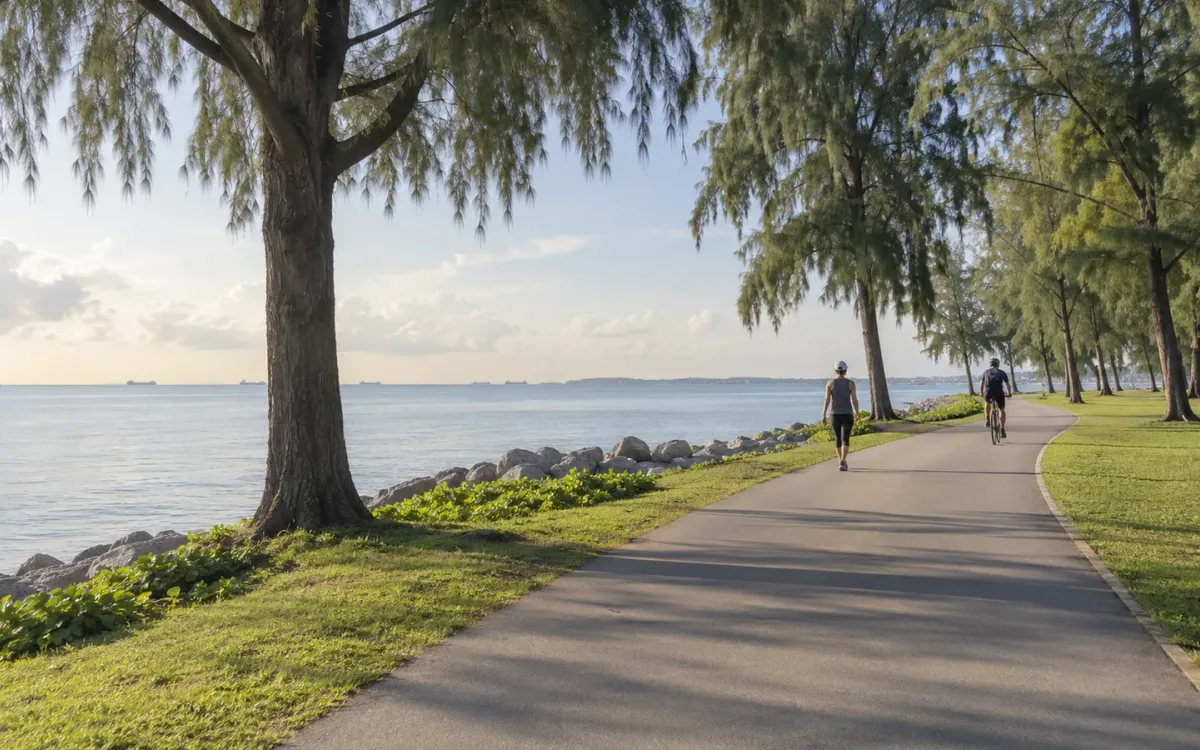
The accompanying image is AI-generated photorealistic editorial artwork inspired by Singapore river parks. It does not document Bishan–Ang Mo Kio Park, its current bridges or a surveyed route.
Related posts
A short East Coast Park run or walk
Plan a simple out-and-back from East Coast Park's Area D, with a clear turnaround, current access checks and room to adjust the outing.

Your first park connector outing in Singapore
Find a park connector near you, choose a manageable section and way home, and read shared-path markings before your first walk or run.

An evening walk or run after work, without a late finish
Plan an after-work walk or easy run in Singapore with a clear finish time, a suitable lit route and a way home if conditions change.